Granite Group
Abstract
Granite is one of the most prevalent slate stones. Iran is most famous for its Marble, Travertine and specially Onyx rocks, however in the recent decade, precious resources of high quality Granite with various colors such as red, black, dark/light green, white and pink have been discovered. Granite resources account for 20% of the country’s dimension stone resources. “West Azerbaijan”, “East Azerbaijan”, “Isfahan”, “Sistan and Baluchestan” and “Lorestan” are the provinces with the most granite production.
Key Words: Granite Stone, Black Granite, Dimension Igneous and Metamorphic Stones, Mineralogy of Igneous and Metamorphic Rocks
[foogallery id=”673″]
What Kind of Rock Is Granite?
Scientific Definition: Granite is an intrusive igneous rock with specific crystalized grains, usually composed mostly of sodic alkali Feldspar and Quartz and sometimes with lesser amounts of Mica, Hornblende and Pyroxene.
Commercial Definition: Granite is an igneous (or metamorphic) rock with specific grains, usually with a range of colors from pink to light/dark grey. Granite is composed mostly of Quartz and Feldspar which are sometimes accompanied by one or more dark minerals with uniform texture such as Gneiss or Porphyry.
The rocks mentioned are mostly consisted of mafic to acidic intrusive igneous rocks such as alkali and calc-alkaline Granite, Granodiorite, Syenite, Diorite and so forth.
Some metamorphic rocks like Gneiss are also categorized as igneous rocks according to commercial definition. Gneiss rocks are crystalized, laminated stones which are composed of silicate minerals with interlocking matrix. Grains orientation is mostly affected by the presence of layers with different mineralogical characteristics.
There are some kinds of Granite called Black Granite which are composed of intrusive and extrusive igneous rocks such as Gabbro, Diorite, and Basalt.
Granite is an igneous rock which is cuttable, squarable, polishable, and is categorized as hard stone.
As you can see, some rocks like Gneiss and Basalt are chemically different compared to scientific definition of real Granites, in other words some stones that are called granite, are not scientifically Granite. Dimension Granite stones are widely exploited around the country and some of them are Granodiorite and creamy/chocolate color Granite of Zanjan, black Gabbro of Masuleh, (cotton white) alkali Granite of Natanz, cotton white Granite of Borujerd, black Hornfels of Tuyserkan, cotton white Granite of Zahedan and Mashhad
Granite Stone
Granite is the most abundant rock in the continental crust and is one of the most prevalent intrusive igneous rocks. It accounts for 95% of the intrusive igneous rocks and 70% of the whole igneous rocks on the earth’s surface. Granite is an igneous rock with at least 20% Quartz and is mostly composed of Quartz, alkali Feldspar and Plagioclase. Granite is an acidic rock with two different origins. It is either formed directly from the melts of acidic crust or melting of oceanic basalt. The shape of Granite mass is dependent on the depth where magma intrusion is cooled, for instance magma intrusions which are cooled in shallow depths are often accompanied by spiral cracks but in the deep areas, magma intrusions are formed as batholiths and stocks.There are 3 types of Granite:1- Granite rocks that are formed during the Precambrian era, cannot be used as dimension stones. The reason is tectonization of different orogeny cycles.2- Batholiths that are formed at the center of mountain ranges, like Granite of Semnan, which belongs to the Eocene epoch3- Granite rocks that are formed by small body of magma, like Granite of ‘Ghasr-e-Firoozeh’, east of TehranIn fact main resources of Granite are formed during Mesozoic and Cenozoic eras.
The Granite stones which have not endured tectonic movements (esp. micro tectonic) and lack alteration are very useful in the building stone industry, provided that, these stones have the proper color.
Appearance of the Granite stone is dependent on the processes on its final surface, which can be polished, bush-hammered and honed.
Because of the presence of some different and colorful crystals in the texture of Granite stones, they usually do not have a specific color, so the color of the texture is considered as the stone color.
Mineralogy of Granite
Silica and Aluminum approximately account for 85% of the chemical composition of the Granite stone, and the remaining 15% includes Sodium, Potassium, Iron, Magnesium and Titanium in the form different silicates.
According to Streckeisen classification, Granite includes Quartz, potassic Feldspar, Plagioclase and dark minerals. In fact in this classification, the name of the stone is dependent on its main minerals.
Table 1: Approximate Percentage of Granite’s Minerals
| Mineral | Percentage |
| Quartz | 20-60 |
| Sodic Plagioclase(Albite & Oligoclase) | 0-35 |
| Potassic Feldspar(often orthoclase, sometimes microcline) | 30-60 |
| Mafic Minerals(Hornblende & Mica) | 5-35 |
On top of the mentioned minerals, some other minerals like Zircon, Apatite, Ilmenite, Magnetite, Hematite and Pyrite may be observed in Granite stone. In case of alteration, other minerals such as Kaolinite and Epidote may also be observed.
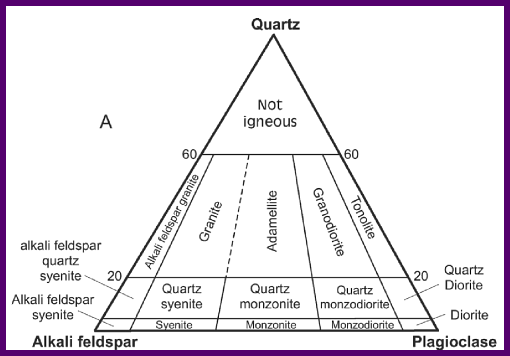
Streckeisen Classification of Intrusive Igneous Rocks Based on Mineralogy
Some kinds of Granite lack a special mineral or contain a mineral more than usual, or they have a special texture, these special kinds of Granite are called by their own specific name. Some of these special Granites that are more important are listed here:
- Aplite: is applied to any Granite only composed of Quartz and Feldspar with aplitic texture which may contain little amount of mafic minerals
- Pegmatitic Granite: is applied to any coarse-grained Granite with pegmatitic texture.
- Granophyre: is applied to any fine-grained Granite whose crystals are formed from Quartz and Feldspar intergrowth
- Charnockite: is applied to any Granite rock, composed mainly of coesite, perthite or antiperthite and orthopyroxene
- Alaskite: is applied to light colored granitic rocks with almost no dark minerals
It is worth mentioning that Granite rocks may also contain metal minerals, like Copper, Zink, Gold, Silver, Mercury, Manganese and Magnetite.
Texture of Granite Rocks
Granite rock is granular, phaneritic and subhedral in texture. Sometimes porphyritic texture in Granite rocks is accompanied by coarse crystals of potassic Feldspar. Sometimes there is a vermicular intergrowth of Quartz in Plagioclase which is called myrmekitic texture. Some less important minerals like, Apatite and fine-grained Sphene may be observed in the texture of Granite rocks.
Granite rocks have a block-like, and massive stracture. Granular texture is the most dominant Granite textue which varies from coarse-grained to fine-grained. Aplitic texture may also be observed in Granite rocks. Pegmatitic texture refers to texture of intrusive igneous rocks composed of crystals usually large (larger than 2.5 cm) in size, like Granites of “Hamadan province”.
Advantages and disadvantages
Most Granite rocks are rigid and dense, so they are considered to be a durable building material. Granite rocks are very impermeable and resistant to impact so they can withstand industrial settings. In high temperatures surface of the rock turns into a flamed condition, this happens because of the difference between thermal expansion coefficients of the different crystals. Using Granite with polished and flamed surfaces simultaneously in buildings, makes aesthetically pleasing views because of the contrast they produce. In Iran, there are so many mines available from which Granite rocks with various colors are extracted. Granite stone is relatively expensive because of the extensive costs of extraction, cutting and polishing, so it is more frequently used in the facing of more important buildings. The other important use of granite is, making pavement.
Because of the radioactive nature of the Granite, it cannot be used in some special places. In other words, in settings with X or Gamma radiation, strong magnetic fields and in the presence of strong chemicals it is not recommended to use Granite rocks.
In the laboratory, Granite rocks periodically emit radioactive radiation which is in the shape of a sinusoidal function, and causes special contamination and carcinogenic effects. Oil non-absorbing Granite is suitable to be used in the kitchen.
Physical Analysis
Table 2: Range of Physical Properties of Granite (for Application in Buildings)
| Range | Unit | Physical Properties of Granite |
| 2643-3204 | Kg/m3 | Density |
| 1.43 | % | Porosity |
| 0.002-2 | % | Water Absorption |
| 139-309 | MPa | Compressive Strength |
| 7.4-18 | MPa | Tensile Strength |
| 27.8 at least | MPa | Flexural Strength |
| 5.4-130.35 | N/mm | Abrasion Factor |
| 28.9-68.5 | GPa | Modulus of Elasticity |
| 5.6-6.8 | Mohs | Hardness |
| 3-6.5 | m2/h | Cutting Speed |
Geographical distribution of Granite in Iran
In Iran, most of magma intrusions which are decent in terms of color and squaring, belong to Mesozoic and tertiary eras, some of them are mentioned here:
- Magma intrusions of Takestan, Tarom, Hashtjin, Ahar and Siahrood zone
- Magma intrusions of Urmia, Dokhtar (Qom, Natanz and Anar) zone
- Granitoid of Zahedan, Saravan
- Granitoid and Gabbro, Sanandaj
- Granitoid magma intrusion and Gabbro of Masuleh, Astara
- Magma intrusions of Karaj, Taleghan, Kelardasht
- Some magma intrusions of northeast Iran (Taknar, Binalud, Sabzevar Desert)
Alkali Granites are available in light, red and pink colors and this makes them very precious and important in the global market. Granites from “Khoy”, “Piranshahr”, in “West Azerbaijan” are unique in this aspect.
Different Kinds of Granite Rocks in Iran
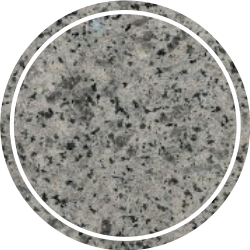 Granite of Shahin Dezh |
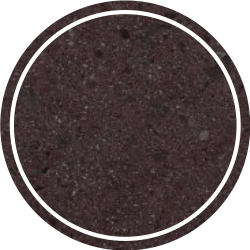 Dark Red Granite |
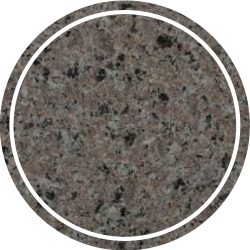 Granite of Bahareh, Zanjan Granite of Bahareh, Zanjan |
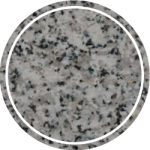 Granite of Nehbandan (Type 1) |
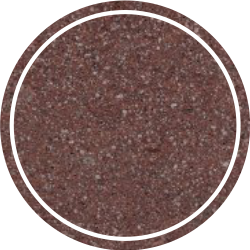 Red Granite of Yazd |
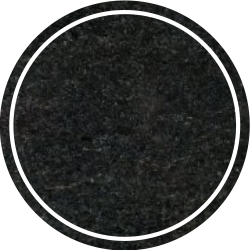 Silky Black Granite of Zahedan |
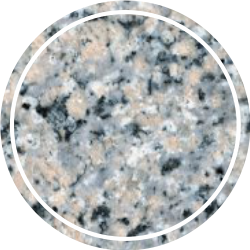 Granite of Nehbandan – Rose |
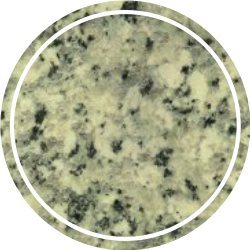 Granite of Nehbandan, (Type 2)Creamy Color |
References
- Moein Vaziri and Dr. Ali Ahmadi (2009), Petrography and Petrology of Igneous Rocks
- Feloriz Kheiri(2002), Petrology of Igneous Rock
- James Dwight Dana, Manual of Minerology
- Kaveh Bastami(2004) Guide to Rocks of Iran
- Ali Darvish Zadeh(1997), Empirical Petrology and Its Aplication
- Fereydun Sarabi, Asad Iranpanah, Cyrus Zar’ian (1995), Petrology, Vol. 1, University of Tehran Publication
- Hejazi(1995), Guid to Dimension Stones, Neyriz Chinistone Co.
- Website of “Iran’s Ministry of Industry, Mine and Trade”
- http://chc.sbg.ac.at
12- ASTM C 119, (2002), Standard Terminology Relating to Dimension Stone.
13- ASTM C 603, (2002), Standard Terminology Relating toDimension Stone
14- Granite Genesis: In-Situ Melting and Crustal Evolution: In Situ Melting and Crustal Evolution, Guo-Neng Chen, R. H. Grapes, Springer Science & Business Media, Tir 5, 1386 AP – Science – 289 pages
15- http://www.karinostone.com/
16- http://granite.blogsky.com/
17- http://davary.com/