Travertine
Abstract
Travertine is a chemical sedimentary rock which is composed of Calcium carbonate and has a layered and porous structure. It is mostly available in light colors such as white, creamy, grey. Some Travertine rocks because of the presence of Iron oxides, are in different colors like brown, yellow and red. Also presence of Carbon causes blue, grey and black colors in Travertine rocks. Iran has a total 180 million tonnes resource of Travertine, which is only 10% of the country’s dimension stones resources. The most famous provinces of Iran with Travertine resources are, “Markazi”, “Isfahan”, “West Azerbaijan”, “East Azerbaijan” and “Zanjan”.
Key Words: Travertine Rocks, Tra Onyx, Sedimentary Rocks, Iran’s Travertine Resources
[foogallery id=”807″]
What Is Travertine?
Travertine is a chemical sedimentary rock which is composed of Calcium carbonate and has a layered structure. Travertine rock is formed in shallow depths, like areas adjacent to springs, rivers, drainage zones, faults and sometimes lakes. The most important source of Travertine is drainage of the water which has more than 80ppm or 2 mmol.L-1 CO2.
ASTM (American Society of Testing Materials) Definition, According to C 119 Standard:
“A porous or cellularly layered partly crystalline calcite rock of chemical origin.”
Definition of “Standards Association of Italy”:
Travertine is a sedimentary limestone which is chemically settled and has a spongy structure. It is used in buildings and for decorative uses.
Most of the time layers are horizontal or with gentle slope (dependent on Morphology of earth’s surface) in travertine resources, this happens because Travertine resources are placed in relatively vast areas, like great mines of Azarshahr and Mahallat.
Travertine rock resources are young and have few or no folds, so this stone has better capability of being cut than other building stones and Travertine plates in different thicknesses and dimensions are easily produced. Largest resources of Travertine is mostly placed in Italy, Iran, Turkey, The United States and Mexico.
Traonyx
Traonyx is a rock formed when Travertine is formed from hot water springs. The main mineral component of this Travertine is fiberous Aragonite which is accompanied by lesser amounts of Calcite, Hematite, Limonite and other colorful minerals.
The physical or chemical environmental conditions that cause formation of Onyx are briefly mentioned here:
- Gradual dispersion of Calcium carbonate solution
- If evaporation rate is more than normal conditions (the conditions in which Travertine is formed)
- The environment must be more acidic than normal conditions
- More CO2 in the solution
For a spring in normal conditions and dissolved bicarbonate in its water, Travertine formation is expected, but in an environment with the mentioned conditions, formation of Traonyx is expected.
Petrology and Mineralogy of Travertine Rocks
Travertine rocks are formed from crystalized Calcite minerals of different sizes. Impurities may cause change in its physical properties such as strength and color. Travertine rocks are mostly observed in light colors like, white, creamy color and grey. Iron and Magnesium oxides impurities produce brown, yellow and red colors, and Carbon impurities produce bluish, grey and black colors in Travertine rocks. Also Silica and clay minerals impurities is expected in Travertine rocks. Travertine stones with solid white colors and uniform lode color are of higher quality. This various colors make Travertine a very beautiful stone and on top of that Travertine can be cut in two different directions:
1- Vein cut: When the stone is cut perpendicular to its natural bedding plane. The end result is a travertine that presents a well-defined parallel vein.
2- Crosscut or Fleuricut: The Travertine cross cut is produced when the blocks are sawn in favour of the vein, which means that the natural vein is avoided. The final result is a surface that presents a fairly non-uniform background, composed by several light and dark clouded areas.
Structure and Texture of Travertine Rocks
Travertine is fine-grained, layered and porous. The most important texture components in Travertine are Dendrites, Micrites, and Sparites. In most Travertine rocks, intercrystalline porosity, moludic, fenestral and shelter occurs. Intercrystalline porosity is very common in almost all Travertine rocks, but it is different in respect to density and form of crystals. Intercrystalline porosity in Travertine rocks can be lowered down to 2% by Calcite, but mouldic porosity does not alter.
Most travertine will have some degree of holes which are generally filled with a cementitious or epoxy filler or polyester resin. On top of that these stones may be used in polished, unpolished, honed and antique ways.
Calcite is the main component of Travertine so structure of Travertine is affected by triangular shape of CO3. Calcite crystals may be observed in as many as 300 different formations.
Travertine may have different structures in respect to its formation environment and conditions:
- Linear Structure: This structure is formed along faults and mineral water springs, and is consisted of a central and a lateral part. The central part is weak and altered, but the lateral part has specific layers in vertical orientation.
- Breast-like Structure: It is consisted of some columns which have originated from gradual emission of carbonic gas from Aragonite mass.
- Stripy Structure: Wave-like stripes and Travertine/Onyx have formed simultaneously and it is easily visible in different cross sections.
- Simple Structure: Is usually observed in most Travertine Rocks
Formation of Colorful Travertine
Lime-containing springs along faults are fed with magmatic and atmospheric water. As atmospheric water penetrates the earth’s surface, it becomes warm and joins gasses like SO2 and CO2 and elements such as Fe and Mg, then it is forced to the upper layers of earth’s surface. During this process concentration of Calcium carbonate increases, eventually a decrease in temperature and pressure, emission of extra gasses and changes in PH make it easy for the formation of Travertine. Calcium bicarbonate changes into Calcium carbonate and then settles. Seasonal changes in water flow, change Mg and Al concentration and cause layers with different colors to form.
Most Important Travertine Rocks in Iran
- White Travertine of Mahallat
- Red Travertine of Azarshahr (near Tabriz) and Jarghuye
- Walnut-colored Travertine of Azarshahr
- Lemon-colored Travertine of Mahallat
Advantages and Disadvantages of Colored Travertine
- Solid white Travertine with uniform pores and lodes is of higher quality. Travertine mines of Mahallat are a good example of what was mentioned.
- Colored lodes caused by Iron oxides impurities in white Travertine rocks, gives it special beauty.
- Creamy color Travertine which is caused by presence of Iron oxide pigments in Travertine rocks is of lower quality.
- Colored Travertine in respect to percentage of Iron oxide pigments may be red, walnut-colored, lemon-colored and so forth. These Travertine rocks are very beautiful because of the difference in amount of Iron oxide impurities in different layers of Travertine.
- Currently Iran is the only producer of Red Travertine
- Walnut-colored and lemon-colored Travertine of Azarshahr in West Azerbaijan and red Travertine of Sardarabad, Ardestan and Natanz are other examples of colored Travertine mines of Iran. Currently colored Travertine has good price and well-sold in international markets.
Why Is Travertine the most Used Building Stone?
- Acceptable strength and hardness
- Easily polished and cut
- Ideally extracted
- Having few cracks (Formed during fourth era, young and with no orogeny )
- Beautiful and in different colors
- Pores make it adhere well to mortar
- Relatively cheap
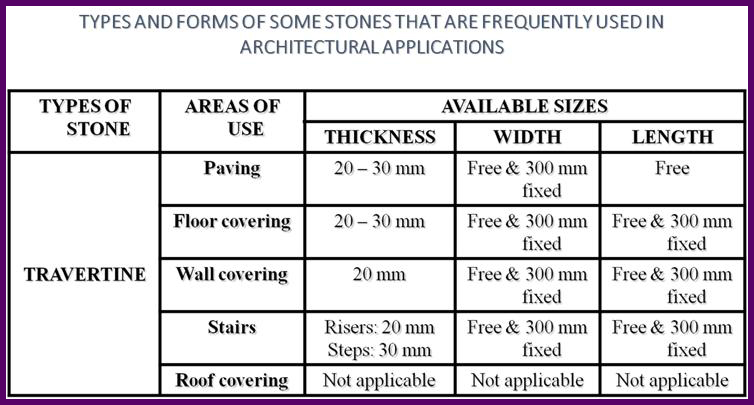
Dimension of Travertine Stones in its Different Applications
Travertine Resources and Iran’s Place in the World
There are totally 180 Million tonnes of Travertine in Iran, which is only 10% percent of country’s dimension stone resources. Dimension stones account for 6.3% of the country’s total mineral resources, which means that Travertine accounts for only 0.6% of the country’s total mineral resources.
In respect to geographical distribution of dimension stones, 69% of discovered resources of dimension stones is located in 5 provinces, Isfahan (31.4%), Khorasan (15.7%), Fars (8.1%), Kurdistan (15.7%) and East Azerbaijan (6.8%). In respect to Travertine resources, most important provinces are Isfahan, East Azerbaijan, West Azerbaijan, Zanjan and Markazi.
Different Travertine Stones in Iran
 Travertine of Atash Kuh (non-wavy) |
 Travertine of Dareh Bokhari (Type 1) |
 Travertine of Hajjiabad (wavy) |
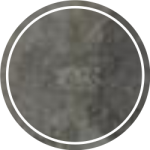 Travertine of Atash Kuh |
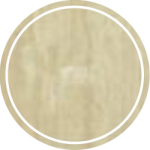 Travertine of Hajjiabad (wavy) |
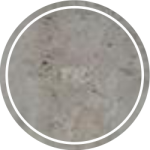 Travertine of Dareh Bokhari (Type 2) |
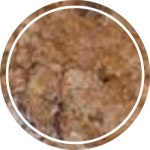 Golden Travertine of Azarshahr |
 Travertine of Atash Kuh (wavy) |
 White Travertine of Atash Kuh |
 Yellow Travertine of Maku |

Travertine of Hajjiabad (non-wavy) |
 Red Travertine of Azarshahr |
References
- Sahabi (2001), Sedimentary Stones
- James Dwight Dana, Manual of Minerology
- Kaveh Bastami(2004) Guide to Rocks of Iran
- mimt.goc.ir
- http://chc.sbg.ac.at
- fironstone.com
- ASTM C119, (2002), Standard Terminology Relating to Dimension Stone.
- Torok, A., (2004), ―Comparison of the process of decay of tow limestone in a polluted urban environment.
- http://www.travertineclassic.com